Strategic Event Management: Creating a Strong Foundation

Did you know that 95% of marketers believe that in-person events can help achieve business goals?

Events are undoubtedly some of the most effective methods for marketing your business. They help you engage directly with your customers, generate leads, launch new products, create brand awareness, etc.

Unfortunately, organizing and managing an event successfully can be tremendously challenging. The good news is that strategic event management could be the answer to your problems.

The success of your event does not revolve around garnering maximum attention only. It hinges on attracting the right attendees and sparking engagement among the audience.

This post will break down the strategic management of events in great detail. Its objective is to help you and your team plan and organize events to fulfil your organizational goals.

What’s Your Role as an Event Planner?

Before you come up with your event management strategy, you need to understand the role of an event planner and strategist.

Event planners play an integral role in organizing an event. For example, you have to choose the event’s theme, identify a strategic location, and find incredible speakers. In addition, you’ll need to prepare a comprehensive list of activities for the event.

The other aspects of the event that you need to look at include;

• Sponsors
• Publicity
• Entertainment

However, you don’t have to do all these alone. You can start by developing the concept of the event and brainstorm the rest with your team.

The Role of Your Event Strategist

It is vital to have an event strategist on your team to help you with a couple of things. Part of this includes aligning your marketing campaigns with the event. The other role is to define the event’s goals and create a strategy to achieve them.

An event strategy revolves around intelligently persuading customers to embrace your new products. It also helps generate leads, strengthen customer loyalty, and boost customer retention.

While an event should be vibrant and fun, your event strategy works behind the scenes to ensure it meets its business objectives.

Essential Elements of Strategic Event Management

Managing events strategically is a broad discipline. This section covers some of its essential elements to help you organize stellar business events.

Events Budget

You should prepare a budget at the initial stages of planning an event. Knowing how much the event will cost will act as a guide for planning. It will keep you and your team realistic and disciplined.

Your events budget will cover the costs of;
• Venue
• Food and drinks
• Decor
• Entertainment
• Staff transportation and accommodation
• Marketing

You might have to collaborate with the finance department to create a realistic budget. Most importantly, your event budget should also have an allowance for miscellaneous expenses.

Team

When planning a conference or any other business event, the chances are that you will work with several people. The team you choose could either make or break the event. As a result, it is vital to allocate various responsibilities and tasks prudently.

This kind of planning should apply in all stages of the preparations. For instance, you can divide roles among team members per their expertise. If you know an individual with experience in catering, put them in charge of food and beverages for the guest.

Additionally, define the roles of the team clearly to avoid confusion. For example, the venue manager should identify an ideal location for the event. Besides that, they should gather information about its capacity, availability, and much more.

You can take it a notch higher by providing each member with a document detailing their specific tasks and responsibilities. The goal is to keep each one of them focused on their role.

Event Goals

Each business event you organize has a specific goal. The purpose could be launching a particular product or generating leads. You should discuss the business objective of the conference with your team.

The ultimate aim for you and your team should be to find the best possible ways to achieve these objectives. Ensure that the event’s goals are specific, measurable, attainable, relevant, and time-bound.

Branding

Branding is another important aspect of strategic event management that you cannot ignore. Your event should have a strong identity and personality.

The first step to getting your event branding right is using an event name that’s catchy and easy to remember and pronounce. Additionally, it should relate to what your event is all about.

You can create a logo for the event and use it for promotional purposes on social media and broadcast media—if your budget allows it, that is. If it’s an invitation-only event for a few stakeholders, you’ll not need to invest heavily in branding.

Technology

Technology plays a fundamental role in the management of events today. Instead of having many disjointed technological tools, investing in one holistic event management solution is essential.

Moreover, you will need to manage various aspects of the event. These will range from marketing campaigns to attendee tracking. Doing this in a unified way will make your work much more manageable.

For example, you may choose to hold a virtual event. In that case, you will need to establish one platform that all your audience members will use to participate in the proceedings of the events.

After the event, ensure that you have captured all the pertinent data, such as the number of attendees, products that drew the most attention, audience’s feedback on various activities, etc.

The information you collect can help you determine whether the event was successful. Based on the data, you will undoubtedly know the event management areas that need improvement in the future.

Tap into the Strengths of Strategic Event Management

Strategic event management can make your events more influential. The best part is that this is a strategy that any organization or business can adopt. If you’ve read this guide carefully, you are now equipped to plan bigger, more successful events.

If you’d like to learn more about intelligent event management and planning, subscribe to our blogs or contact us for our services.

5 Major Benefits of Strategic Marketing for Professional Services

Did you know that less than 49% of companies claim that increasing customer acquisition is their primary focus?

Professional services can be a tough sell, because potential customers may not understand what you do or how you can help them.

Even if you have an amazing product or service, it can be difficult to make sales if you’re not marketing your business in the right way.

Strategic marketing is the key to success for professional services.

If you want to increase your leads and sales, you need to have a plan. This plan should focus on your target market, what makes your product or service unique, and what advantages you have compared to others.

Want to know more? Keep reading to learn the 5 major benefits of strategic marketing and what effect it can have on professional services.

What Is Strategic Marketing?

Strategic marketing is an important tool for any business that wants to stay competitive. Businesses can improve their chances of success by creating a long-term plan and setting specific goals. This will help them stay on track and make progress.

Strategic marketing is also different from other types of marketing in that it is much more focused. This focus allows businesses to track their progress and see how well they are doing. This way, they can change their strategies if needed.

To stay ahead of the competition, it is essential for any company to have a good strategic marketing plan.

Why Is Strategic Marketing Important?

There are countless reasons why strategic marketing for professional services is important. We don’t always see the direct correlation between our efforts and the results, but that doesn’t mean those efforts aren’t important.

Take a look at these five important reasons why strategic marketing planning is so vital for any business:

1. Increased Sales

One of the main benefits of strategic marketing is increased sales. If you want to reach your target market, you need to take a planned marketing approach. This will help you convert leads into paying customers.

Tactical marketing is when you focus on specific channels and activities. Strategic marketing is when you take a bigger view, looking at all the different ways your business interacts with the market. This includes an analysis of the competition, the company’s strengths and weaknesses, and the needs of the target audience.

You can use this information to create a marketing plan that will guide your company’s marketing efforts. This can help to ensure that all activities are aligned with the company’s goals and that resources are used efficiently.

Although it takes more effort, strategic marketing can help your business grow and make money.

2. Improved Visibility

Strategic marketing can also help improve the visibility of your professional services business. You can make sure that more people see your business by creating a good marketing strategy. This can help with brand recognition and awareness.

Traditional marketing methods are excellent ways to promote your business. By taking the time to create a marketing plan, you can ensure that more people are aware of your business. This can lead to improved brand recognition and increased clientele.

3. Developing a Strong Brand Identity

A strong brand identity is essential for any business. But it is especially important for professional services businesses. Your brand identity is what separates you from your competitors. It also helps you build trust and credibility with potential clients.

It should communicate what you do, who you do it for, and why you do it. Your brand identity should be reflected in everything from your logo and website to your email signature and business cards.

When done right, your brand identity will help you attract the right clients, build trust and credibility, and ultimately grow your business.

4. Enhanced Reputation

In today’s hypercompetitive business environment, reputation is everything. A company’s reputation can make or break its ability to win new business, attract and retain top talent, and command premium pricing.

Enhanced reputation is another key benefit of strategic marketing for professional services. By taking a strategic marketing approach, you can more effectively build positive relationships with your target market and improve your business’s overall reputation.

5. Increased Efficiency and Productivity

Last but not least, strategic marketing can also help increase efficiency and productivity. By streamlining your marketing you can save time while achieving your desired results.

In addition, strategic marketing can help you better understand your target market and what they are looking for in a professional services business.

By taking the time to research and develop a targeted marketing plan, you can ensure that your professional services business is meeting the needs of your target market. As a result, you will be able to attract more customers and grow your business more efficiently.

Get Started With Strategic Marketing Today

If you’re looking to increase sales for your professional services, consider strategic marketing strategies. Strategic marketing is a planned and structured approach that takes all of the unique aspects of your business into account to create a cohesive and effective plan.

It’s not just about advertising or promoting your services. It’s about understanding what makes your company different. Then using that information to reach potential customers in a way they’ll understand.

Here at Big Bold Thinkers, we have years of experience helping businesses just like yours achieve success with their marketing strategies. Contact us today to find out how we can help you take your business to the next level!

Boost Your SEO Performance by Avoiding These 7 Mistakes

Nearly 70% of all activity online begins with a search engine. The majority of search engine users (75%) don’t bother checking the first page of results, though. Without search engine optimization (SEO), consumers might not find your website online.

Even with an SEO strategy, the wrong mistakes could cost you top-of-page rankings.

Want to boost your SEO performance to reach more customers this year? Read on to make sure you’re avoiding these seven costly mistakes first!

1. Never Gathering Research

One of the biggest SEO mistakes you can make is attempting SEO marketing without research and a strategy first.

Without research, you’ll make assumptions about who your customers are, what they care about, and their search intent. Their search intent indicates what they expect to find during a search. If your content doesn’t match their intent, Google won’t display it on search engine result pages (SERPs).

Gathering audience and keyword research will help you create content that aligns with the user’s search intent. Then, you can make sure your website appears in front of relevant consumers.

Start by segmenting your target audience into smaller, distinct buyer personas. You can define these personas based on demo- and psychographic research. For example, you might consider the consumers:

  • Location
  • Gender
  • Age
  • Marital status
  • Household income
  • Buying behaviors
  • Interests
  • Hobbies
  • Pain points

Focus on the pain points your customers are experiencing. How can you leverage your expertise to offer them a solution?

Think of each buyer persona as a real person. What questions do they ask while online? Keyword research can help you appear for those searches.

You can gather keyword research using Answer the Public, Google Trends, or by working with an SEO agency.

Focus on longer keywords that include four or more words. These longtail keywords are precise, allowing you to better determine the search intent.

As you begin applying these SEO tips, imagine each persona as a real person. Create your SEO content with specific consumers in mind. Personalization will help you forge stronger connections with your target audience.

2. Neglecting Your Website

Another major SEO mistake you can make is ignoring your website. Google prioritizes sites that are:

  • Mobile-friendly
  • Secure
  • Easy to use and navigate
  • Fast

Run your site through Google’s PageSpeed Insights and Mobile-Friendly Test to check its performance.

Try to improve the user experience (UX) on your site, too. A positive UX can improve your dwell times. Higher dwell times can boost your SEO performance and organic rankings.

If you’re neglecting technical SEO, visitors will leave without exploring. Your bounce rate will start to increase, negatively impacting your rankings.

3. Forgetting to Create Fresh Content

Google also prioritizes fresh, unique, helpful content that aligns with the user’s search intent.

Take the time to develop a content marketing strategy that aligns with your SEO marketing strategy.

First, take a look at your keyword research. Let your focus keywords determine what topics you’ll cover.

Don’t write content and place the keyword within the post after the fact. Otherwise, the keyword might sound awkward within the content.

Try to mix up your content marketing strategy this year, too. Create more interactive content, like polls and quizzes. Try eye-catching graphics like infographics or engaging videos.

Diversifying your content will ensure your posts appeal to different consumers.

About 70% of marketers say content helps educate their audience. Focus on demonstrating EAT (expertise, authority, trustworthiness) overselling within your posts. Otherwise, heavy sales language could scare readers away.

Instead, provide readers with helpful solutions to their problems.

Then, add a call to action at the end of your post. Direct readers to contact you for help or information. You can also direct them to other blogs or the product page on your website.

When creating your content, don’t neglect internal and external links, too.

Make sure to focus on quality over quantity to create the best SEO content possible.

4. Never Generating Backlinks

Backlinks are one of Google’s top-ranking factors. These links direct readers on other websites to your content. The more backlinks you generate, the more traffic you can gain.

Start generating backlinks by looking for guest blogging opportunities on websites that have high domain authority (DA).

Otherwise, consider working with the best SEO marketing agency. They can help you generate quality backlinks for stronger rankings.

5. Mismanaging Your Listing

If you want to boost your SEO performance, you need to consider all types of SEO. For example, local SEO can help you reach nearby customers.

Make sure to claim and optimize your Google Business listing. Confirm that the information on your profile matches what appears on your website. Match every abbreviation, too.

Google will review your website to verify the information is accurate.

Ask you’re happy customers to post their reviews on your listing as well. Positive reviews can boost your brand’s credibility and SEO performance.

Otherwise, update your listing with fresh videos, images, and posts.

6. Writing Weak Titles and Descriptions

Your SEO title tag and meta description will appear on SERPs as consumers search for your content. Strong titles and descriptions can boost your clickthrough rate. A higher clickthrough rate can improve your SEO performance and rankings.

It will also help you attract more traffic to your site.

Make sure your titles and descriptions are easy to read and understand. Don’t forget to add your focus keyword to both, too.

7. Never Hiring a Pro

One of the biggest SEO mistakes you can make is neglecting to work with an experienced professional. You can leverage an SEO agency’s experience and expertise to boost your rankings. Meanwhile, you can focus on what matters most: your customers.

With help from an agency, you’ll never fall behind the latest SEO trends like voice search optimization.

Instead, you can continue improving your SEO marketing strategy to expand your reach online.

Boost Your SEO Performance: Hire an Agency to Avoid These Costly Mistakes

Don’t miss the chance to boost your SEO performance this year. Instead, make sure you’re avoiding these costly SEO mistakes. Otherwise, consider working with an experienced SEO marketing agency.

With help, you can improve your rankings in no time.

Want to work with the best SEO agency available? We’re here to help.

Get in touch with our team today to get started.

3 Ways Team Building Activities Can Help to Bring Your Team Together

Studies have found that engaged workers have a positive impact on a company’s bottom line. They boost profits by 21%, sales by 20%, and customer satisfaction by 10%.

Yet a majority of employees are still disengaged at work.

One way your business can create an engaged workforce is by having outstanding team building activities. These are designed to connect workers and bring them together, whether it’s a simple ice breaker or a several-day retreat.

Here are three ways that you can make your business a better place to work through team building events.

1. Team Building Leads to Stronger Collaboration

At its core, team building provides a fun, relaxed way for employees to get to know each other before they begin the higher-stakes work at the office.

Collaboration involves your team working together as equals. Research has shown that this is an effective management tool—workers who are free to exchange ideas and respect each other are more productive.

So when employees go on a hike together or go to happy hour together, they become more comfortable with each other. More structured team building like playing games together helps improve communication and requires creative thinking.

When it comes time to problem solve, delegate tasks, and get the job done, your employees will be ready to collaborate.

2. Team Building Events Improve Motivation and Morale

One of the biggest benefits of team building exercises is fostering positive work relationships. Anyone who expects to see their friends when they arrive at work is going to be more motivated.

Unfortunately, the reverse is true as well. One study found that feeling isolated at work has profound psychological effects.

This is especially important in the age of the virtual workplace. Employers need to find ways to connect their workers and bring them together so that they feel like valued members of the team.

Whether it’s virtual board games, trivia, or another team builder, there are plenty of ways to keep your team engaged with each other.

3. Team Building Activities Lead to Better Communication

Sometimes the fundamentals are most important—and communication is a foundational piece no business leader can afford to forget about.

The fact is that a team that communicates more effectively with one another will be more productive. Team members who are comfortable with their peers will tell them about any problems they encounter early on, making it more likely that they’ll solve those problems.

Workers who have taken part in team-building together will be more likely to jump on a Zoom call or have a face-to-face meeting with their coworkers. These more personal ways of communicating are more effective than email or texting when discussing complex issues.

They’re also more likely to resolve conflicts quicker. If you feel like you know someone, it’s easier to clear up misunderstandings.

Keeping Your Team Together

The bottom line is that when you invest in team building, you improve retention and boost productivity. You show your workers that you care about them and want them to work well together through team building activities.

If you want to get started on team building events for your business, contact Big Bold Thinkers through our website.

Why Every Event Needs Event Technology Solutions

While event technology has been on the upswing since the early 2000s, the Covid-19 pandemic proved organizers and attendees don’t just want it — they need it to stay relevant. Musicians alone have live-streamed almost 80,000 concerts since 2020.

Live streaming is only one aspect of the ever-growing event technology industry. Even if you don’t plan on streaming an event, here are six ways event tech can improve the attendee experience, bolster attendance and make every event smoother.

1. Reduce Long Lines for Tickets and Registration

The days of registering for events, whether it’s a charity run or concert, are over. That’s good for event planners because a recent survey showed that 45% of event-goers abandon lines without making purchases. While that study focused on purchasing food and drinks, the same may also be said for event registration and tickets.

People will wait in long lines for their favorite bands and new products, but if you’re a new brand, have you established that kind of loyalty yet? Unless you’re a true marketing maverick, the answer is probably not.

If you’re hosting a new trade show, convention or sporting event, you need the convenience of online registration technology on your side. When people don’t have to suffer through long lines, they may be more likely to give your event a chance.

2. Live Streaming Boosts Attendance

As we mentioned earlier, live streaming is on the rise. While that obviously means more people can see your event happening in real-time, it can also boost attendance for future events.

According to a survey conducted by event planning publication Events Today, 23% of people who attended virtual events later attended physical events organized by the same company. If potential participants are on the fence about attending, a virtual event is a way for them to test the waters.

3. Delivering and Presenting Content

If event technology makes events more accessible, what can it do for organizers during the event itself? That answer lies in better, more convenient audio/visual equipment.

A trained A/V team is hard to beat for large events and concerts, but not every organization is blessed with a big budget. Instead, event planners can turn to new event technology that uses less manpower and costly equipment. Let’s look at an example.

Say you’re hosting a seminar in a large space. Not everyone will be able to see the keynote speaker they’ve been waiting for. Traditionally, you’d need multiple cameras, a huge soundboard and lots of lights to make it happen. Every one of those aspects needs multiple trained technicians.

Now, you can use programmable LED light walls, digital cameras and wireless microphones to make that happen at a fraction of the cost and effort. A small team of two or three technicians oversees it all.

4. Communication and Direction

For successful events of all kinds, communication is key. Attendees need maps, schedules, pamphlets and signs to know where to go. Printing costs can bloat event budgets even though all of those materials are necessary.

Instead, consider communicating through digital platforms. This can be a website, social media page or even an AI chatbot that sends important information directly to attendees’ phones. While signage is still necessary, your event can rely on it much less when you implement digital marketing communications.

5. Networking

The last point hinted at the importance of social media to events, but networking shows just how essential it is. At a successful event, speakers, hosts and attendees will meet a lot of people. According to the International Association of Exhibitions and Events, 76% of event attendees go to events to network.

As the organizer, you want to facilitate those important relationships. This can be done using hashtags, Facebook event check-ins and other types of social media posts. Taking it a step further, you could also have an event-specific app that connects people. Either way, your attendees have quick ways to make going to your event worthwhile.

This does, however, require some savvy planning and marketing. As much as an event needs organizers on-site to make things run smoothly, they need preliminary marketing and planning to get it done.

6. Event Technology Facilitates Data Analysis

We’ve covered how event technology helps before and during events, but what about the aftermath? To be used to its fullest potential, technology for event strategy should also be used to analyze attendee data.

If your event tech strategy included a social media campaign, you can use that data to pin down your demographic. For future events, you can reach more people that would love to attend.

Event tech solutions can also be used to:

  • Get feedback on different aspects of your event
  • Plan future speakers and activities
  • Measure how many people registered versus how many attended
  • Track sales of products offered at your event by either your company or vendors

The Challenges of Event Technology

All of the advantages of integrating event technology come at a cost — your business needs to implement multiple strategies and platforms. This can be confusing and result in crossed wires. Maybe the marketing team thought another department was setting up the social media campaign. Perhaps you get banners back from printers and they don’t exactly embody your brand.

When that happens, attendees notice. They can sense when organizers aren’t on the same page. That’s why you need Big Bold Thinkers.

We don’t just specialize in corporate event management — we make digital marketing plans come to life. From the moment you announce your event online to the days of pouring over attendance statistics, we’re here to help. As an all-in-one marketing firm, we can help your team use event technology to its highest potential. Need a consultation? Contact our event technology planning team for help.

Why Short-Form Videos are More Popular Than Ever

Do you remember Vine? The video app went viral in 2012. Within months of launching, Vine was a household name. Millions of people tuned in to watch videos of people dancing, cooking, and cracking jokes.

And, then, it disappeared.

In 2022, Vine’s story may seem irrelevant. After all, we are living in the age of TikTok and Instagram reels. Vine was the short-lived entertainment of the past.

However, Vine’s rise and fall continue to make an impact on marketers. Many marketers wonder if modern video apps will fail just as quickly as Vine did.

The truth of the matter is that TikTok is nothing like Vine. Read on to learn why TikTok and Instagram reels are unique. And find out why short-form videos are here to stay.

Short-Form Videos & The Perfect Length

When it comes to short videos, size matters. Videos that are too long fail to hold your attention span. Meanwhile, videos that are too short fail to draw you in.

Unlike the sixty-second reels of TikTok and Instagram, Vine videos only lasted for six seconds. As most marketers know, six seconds is not enough time to tell a story. It’s certainly not enough time to effectively market a product.

Unfortunately, this is what ultimately led to the application’s demise.

In June of 2013, Instagram introduced its 30-second video clips. Interestingly, this was the same month that Vine’s engagement plummeted.

Ultimately, Internet users found themselves more drawn to slightly longer videos. While they did enjoy the rapid-fire of short-form content, they wanted their short videos to engage them for longer amounts of time.

Today, short-form videos hover around a more ideal amount of time: sixty seconds. In one minute, a content creator can tell a story or share some useful information without boring the viewer.

Because short videos are now much closer to the perfect length, we can rest assured that TikTok and Insta reels will be around for a while.

A Huge Audience

Thanks to these format-related improvements, video reels have grown in popularity. Notably, they have far more viewers than Vine ever did.

Back in 2013, at the peak of Vine’s hype, the company still refused to publish the number of active users.

This contrasts greatly with TikTok’s approach to data. The company has not been afraid to release the numbers demonstrating its success. And it’s probably because the results are so overwhelming.

Across the globe, TikTok has 1.8 billion users per month. In other words, almost 1 in 3 people on Earth tune into TikTok on a semi-regular basis.

These numbers do more than just show that short videos are popular. They also reveal the reason why creating short videos is so important.

Consumers from all over the world are tuning into these reels. As a result, these videos have the unique ability to introduce brands to interested customers in an ultra-efficient way.

Create Successful Videos

Short-form videos are here to stay. Now that they have achieved the perfect length, these reels are attracting billions of viewers per month.

But, how can brands respond to the rise of short-form videos? Is there a way to make super successful content?

If you would like amazing short videos for your brand, click here to contact us. Big Bold Thinkers can help you create engaging content for TikTok and take your brand to the next level.

Lead Retrieval Solutions for Trade Show Organizers

Running a successful trade show is all about helping businesses network. Unlike other marketing tactics, trade show exhibitions connect businesses with already highly-motivated audiences in a personal, hands-on way. To help clients get the most out of trade shows, and be more likely to return to yours, you need to be armed with lead retrieval solutions.

81% of trade show exhibitors use email as their lead retrieval method of choice, while others use phone calls, in-person meetings and social media. Managing that data and putting it to good use can be difficult, so let’s explore the ways trade show organizers can make lead data collection easier for clients.

Lead Retrieval: The Old Way

If you’ve been around trade shows for a while, you remember the days of paper business cards and written sign-up sheets. This form of lead retrieval was often left up to the exhibitors to create and maintain.

Unfortunately, this method leads to unorganized and lost lead retrieval data. According to design software company Adobe, 88% of business cards get thrown away in less than a week. Whether that’s accidental or on purpose, that’s a lot of information to lose.

NFC-enabled Badges and QR Codes

To provide a more modern lead retrieval solution, trade show organizers have two options.

The first is NFC-enabled badges, or near field communication-enabled badges. Along with a picture and other credentials, an NFC-enabled badge has a microchip in it. The chip contains data such as email, job title and other contact information. An exhibitor simply needs to scan it to see and save data.

QR, or quick response, codes operate essentially the same way but with a bar-code instead of a microchip. An exhibitor simply needs to scan it to save their information.

App-based Lead Retrieval Solutions

Trade show organizers can purchase lead retrieval apps that equip smartphones and tablets with the software needed to scan QR codes or NFC chips. Their exhibitors can enrol in the program for free or rent it from the organizer.

This is great for trade shows with smaller businesses. Your clients won’t have to rent any extra equipment and can save lead retrieval data to their own devices for later use.

Lead Retrieval Equipment for Phones and iPads

Some smartphones and tablets don’t have the required hardware to scan QR Codes or NFC chips. However, you can provide small devices that connect to them so they’re able to retrieve data.

Scanner Rental

Sometimes, it makes more sense to provide full scanner equipment than relying on smartphones or tablets. Imagine your trade show has only a few exhibitors, but they attract large amounts of potential clients. Individually scanning each attendee’s badge isn’t viable.

In that case, you can rent out or install kiosks. After speaking with businesses at your trade show, attendees can scan their own badges at a nearby kiosk so they can be contacted later.

How Do Event Organizers Bring It All Together?

If your trade show needs a variety of lead retrieval solutions implemented for a wide range of clients, let Big Bold Thinkers be your all-in-one solution. We’ll help you find the best lead retrieval solutions for your trade show and make sure your attendees and exhibitors know how it works. Not sure where to begin? Contact Big Bold Thinkers today for a consultation.

Maximize Your Marketing: How to Combine SEO and PPC Efforts

The modern marketer has a wealth of opportunities for reaching potential customers. Paid advertisements have a 200% ROI, and 82% of marketers agree that SEO improves your all-around effectiveness in generating traffic and sales.

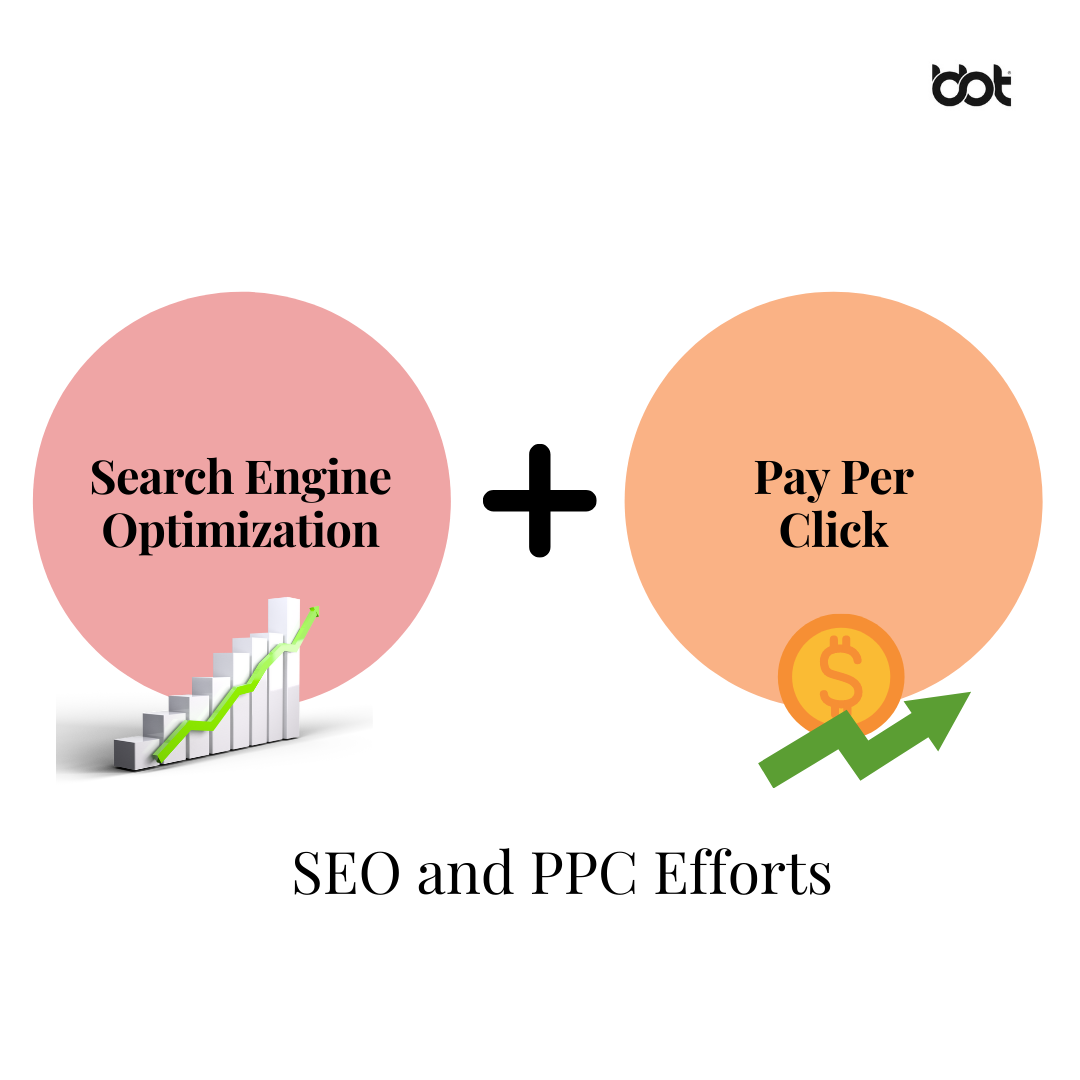
So, what if you combine SEO and PPC efforts?

It’s important to understand that both SEO and PPC have their strengths, but they are very different in terms of approach and what they offer business owners. But when you combine them, you can see massive benefits to all aspects of your business!

Let’s talk about combining your SEO and PPC campaigns to get the most out of search campaign results for your business.

Analyze User Behavior and Most Effective Pages

The first way that you can combine SEO and PPC efforts is through analyzing behavior and your website’s pages.

By understanding how users interact with your content, you can get a better idea of how traffic flows through your site and which pages are most effective. This information can help you make decisions about where to focus your SEO and PPC campaigns.

In order to keep your bounce rates as low as possible, you want to utilize your most compelling and relatable content. If you place your PPC ads on a landing page that isn’t relevant, you’ll be sure to see higher bounce rates.

Use this same thought process with SEO by targeting the right keywords on your pages that are most relevant to the topic and content.

Increase Brand Awareness

A study by Google showed that 88% of people who conduct a local search on their smartphone visit a store within one day. Combine this with the statistic that 72% of people say they’re more likely to buy from a site that they know, and you can see the importance of increasing brand awareness.

One great way to combine SEO and PPC is through using branded keywords in your ads. This will ensure that your business name appears when users are searching for it. You can also increase brand awareness through other marketing efforts like social media, PR, and email marketing.

Targeting Regions and Markets

Another way to combine SEO and PPC is through targeting regions and markets. This can be done by using different geo-targeting tools in your ads. For example, you can target a certain country, state, city, or postal code.

By doing this, you’ll be able to get a better understanding of what regions are more likely to convert into customers. You can also use this information to create custom landing pages that are specific to the region you’re targeting.

Don’t stop with the landing pages, either; you can test out different keywords and audiences with your pages.

This will help improve your click-through rates and reduce your cost per acquisition.

Test PPC Campaigns For SEO Content

A great way to use PPC is to test out content for your SEO campaigns. This can be done by setting up a paid search campaign and driving traffic to landing pages with different pieces of content.

By doing this, you’ll be able to see which content is most effective at generating leads and sales. You can then use this information to improve your SEO campaigns. This is critical since SEO takes months before seeing results, whereas, with PPC, you’ll get results within a few days.

Not only will this save you time, but it will also ensure that your SEO campaigns are most effective. Running A/B testing to improve all of your campaigns is an effective strategy when combining SEO and PPC.

Remarket Customers With PPC Campaigns

One of the best things about PPC campaigns is the ability to be very specific with the audiences that you target. This is done by creating remarketing lists.

Remarketing allows you to target people who have already interacted with you on your website, social media pages, or email. This gives you the ability to reach out to them when they’re most likely to buy from you.

You will see that many customers will land on a website, shop around, but then not end up buying anything because they are not ready, they are comparing prices or any other reason.

This same customer can repeat this process several times without purchasing anything. Often, this same customer can then forget about the website and product as a whole.

Running targeting ads towards these customers can be an effective strategy to bring them back in for the final purchase. Whether that be through advertising a specific product, or just putting your brand in front of them, when they are ready to purchase, they think of your brand first!

By combining SEO and PPC for retargeting campaigns, you’ll be able to improve your chances of getting quality leads and sales from customers.

Optimize Your Landing Pages

When talking about how to combine SEO and PPC, you have to bring up landing pages. They are a critical part of any campaign to increase leads and sales. However, if you want them to be most effective, you have to optimize for two things: potential customers and search engines.

For potential customers, you want to make sure your landing pages are relevant to what they are looking for. This can be done by having a clear and concise headline that matches what they clicked on.

You also want to make sure the page loads quickly, is easy to navigate and has a call-to-action that is visible. All of these factors will help improve your conversion rate!

As for search engines, you want to make sure your landing pages are optimized for the keywords you’re targeting. This means using those keywords in the title, throughout the content, in the meta description, and in the URL.

Doing this will tell search engines that your page is relevant to what users are searching for. This will help your page rank higher in the search engine results pages.

How to Combine SEO and PPC Efforts

The key to a successful marketing campaign is being able to reach the right person at the right time with the right message.

If you combine SEO and PPC efforts, you have the best and most effective way of reaching your target audience, reducing costs per acquisition, improving conversion rates on landing pages, and increasing organic rankings in search engine results pages (SERP).

Follow the tips we provided and you’ll be sure to reap the benefits. If you have questions about PPC or SEO strategies, be sure to reach out to our team of experts.

Share Of Voice: The Complete Beginner’s Guide

What is share of voice? The term “share of voice” (SOV) is a relatively recent marketing phrase that refers to a company’s share of the market’s voice. In other words, it’s a way to measure how much noise a particular brand is making compared to its competitors.

Share Of Voice: The Complete Beginner’s Guide

It can be used to help businesses understand how they stack up against their rivals and identify growth opportunities. If you’re just starting out in marketing or curious about the share of voice and want to learn more, read on!

Explanation Of Share Of Voice

Share of Voice (SOV) is a marketing metric that allows you to assess your brand’s awareness across various marketing channels. Using this metric, you can determine how effectively your ads, social media mentions, and even website traffic compare to your competitors. As a result, you can determine how significant your online presence is in your niche.

SOV is also a valuable tool for understanding how many shares of the market’s attention your brand receives. It can help you determine whether or not you need to allocate more resources to marketing to increase your visibility. Additionally, SOV can show you which specific channels generate the most awareness for your business and where you should focus on improvement.

Market share and revenue tend to be synonymous with the share of voice, though market share is not the same as SOV.

What is Market Share?

The amount of market share a company has is the proportion of an industry’s sales it controls. This means the ratio of overall industry income that your company has earned by selling its products and services. Large companies have the most market share and compete with smaller enterprises.

Market share only refers to your sales share despite exhibiting a similar concept (calculating your performance compared to your competitors).

How to Calculate Share of Voice

To determine the share of voice, divide your brand’s performance indicators by the total market performance. This might be your social media engagement, website traffic, or advertising clicks. Then, multiply the number you receive by 100 to find your percentage.

For example, if your company has a social media engagement of 50,000 and the total market engagement is 100,000, your share of voice would be 50%.

To find your engagement numbers, you’ll need to become familiar with the data analytics of your social media platforms and website. There are a variety of different tools to help facilitate this process.

Once you have these numbers, it’s easy to calculate your share of voice using this formula: (Brand Performance Indicator / Total Market Performance) x 100 = Share of Voice %.

You’ll need to utilize the data analytic tools of your channels to find the necessary numbers needed to calculate SOV. However, most social media platforms and website analytics will have this data readily available. Once you have it, the calculation is straightforward.

Which Channels Should Be Calculated For SOV?

When calculating the share of voice, it’s important to consider all the channels through which your company is being exposed. This includes advertising and social media, website traffic, and other avenues by which customers might interact with your brand.

The most common channels that are used to calculate SOV are:

  • Advertisement clicks (including online and offline)
  • Social media mentions (Twitter, Facebook, Instagram, etc.)
  • Website traffic (unique visitors, page views, time on site, etc.)

It’s important to measure all of these channels to get a comprehensive view of how much attention your brand is receiving. However, don’t feel overwhelmed. You don’t need to track every possible metric. If you’re just starting out, it’s best to pick the most relevant channel and start there.

How Can You Use Share of Voice?

The share of voice indicates how much attention (or share) you are receiving compared to other businesses in your sector or field. With this information, you’ll be able to understand where more resources should go towards increasing awareness for your brand online through specific channels such as social media or advertising campaigns.

Brand awareness is essential for any business, no matter how small. By tracking your share of voice, you can ensure that your company gets the attention it deserves and makes sure that you’re doing everything possible to reach your target market.

Another benefit of SOV is that it can help you identify new growth opportunities. If your share of voice is low in a particular channel, that might indicate that there’s room for expansion in that area. For example, if your website traffic is down, you might consider increasing your SEO efforts to drive more visitors.

The share of voice can also be used as a benchmarking tool. By tracking how your company’s share of voice changes over time, you can measure the success of your marketing campaigns and understand which channels are most effective at driving awareness for your brand.

Customer Relations and SOV

The share of voice is also helpful for customer relations. By measuring the share of voice, you can understand how satisfied your customers are with what they see online about your brand and how many people are talking about it in positive ways versus negative ones.

This information allows businesses to adjust their strategies accordingly so that more consumers will engage positively on social media platforms such as Twitter or Facebook. Additionally, it helps companies avoid bad publicity by identifying potential issues before they get out of control.

SOV Example

Let’s say Bob is a manager at Celebcash, which sells coffee. He wants to know if his company has enough share of voice compared to other similar brands like Elk Coffee or Slammin’ Scones.

To start, he’ll need to calculate the share of voice for each company. For Celebcash, this would include advertisement clicks, social media mentions, and website traffic. Elk Coffee and Slammin’ Scones would only include advertisement clicks and social media mentions because they don’t have websites.

Once he has these numbers, Bob can easily compare these numbers using a graph or percentage calculation. From there, he can decide whether or not to invest more in advertising or social media to increase the share of voice.

If you want to stay ahead of the competition, it’s important to understand SOV and optimize your content. Big Bold Thinkers is here to help. Contact us today and let us show you how we can help increase your SOV so that you can dominate your industry.

Video Testimonials: Why Include Them on Your Landing Page?

Including video testimonials on your landing page could transform your conversions.

Video testimonials are more effective than text-based testimonials because they allow potential customers to see and hear real people talking about how your product or service has helped them.

In this guide, we’ll discuss the benefits of using video testimonials on your landing page and explore some tips for creating effective ones.

What are Video Testimonials? Why Are They Important?

Video testimonials are short videos of real people talking about their experiences with your product or service. They’re a great way to show potential customers that your product or service is effective and trustworthy, plus make your landing page more dynamic.

Video testimonials can be more effective than text-based testimonials for many reasons, and they’re the perfect tool to humanize your brand to boost its relatability. Done right, a landing page testimonial can become a centerpiece of your landing page, commanding the attention of every visitor.

Why Use Video Testimonials on Your Landing Page?

There are several benefits of using video testimonials on your landing page.

For one, landing page testimonials can build trust and credibility with potential customers. When potential customers can see and hear real people talking about how your product or service has helped them, it feels more real.

Secondly, they can also humanize your brand and make it more relatable. Our human brains react strongly to the faces and expressions of others. Instead of a faceless brand, your customers see a face they can relate to.

Videos can also make a stronger impression on customers. We’re visual creatures, so what we see in visual media tends to last longer in our minds than in other media.

What Does an Effective Video Testimonial Look Like?

When creating video testimonials, it’s important to make sure that they’re high quality and engaging. Here are some tips for creating effective video testimonials:

  • Ensure a professional look by using good lighting, sound quality, and camera angles.
  • Keep your videos short and sweet. Most people won’t watch a long video testimonial.
  • Make sure your testimonials are engaging. Have your customers talk about their experiences in an interesting and compelling way.
  • Script your video in a way that retains your brand’s unique voice.

In general, you need to avoid the pitfall of a cheap-looking video testimonial, which could have the opposite effect. Remember that this is an investment in your growth, so be sure to treat it like one and take the time to get it right.

The Many Reasons to Use Video Testimonials On Your Landing Page

Video testimonials are a great way to show potential customers that your product or service is effective and trustworthy. Video testimonials can help increase conversions by building trust and credibility with potential customers when featured on your landing page, which in turn can drive growth in your business.

Looking for more ways to upgrade your company marketing? Contact us today to find out how we can help.